The Difference in Cold, Warm and Hot Forging

Compare the processes, benefits, and effects of forging at cold, warm, and hot temperatures. These various types of forging involve different processes used to achieve specific metallurgical characteristics on the finished product.
Explore the information below to learn more about cold, warm, and hot forging.
Cold Forging
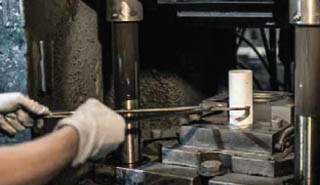
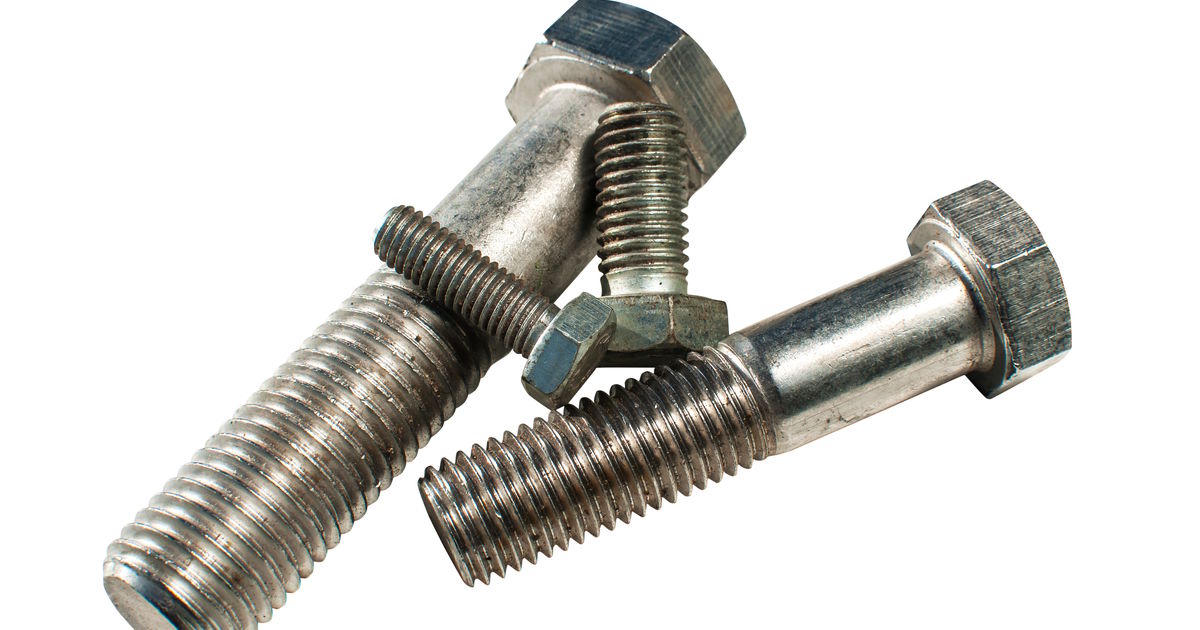
Cold forging and cold heating involve either impression die forging or true closed die forging with lubricant and circular dies at or near room temperature. Carbon and standard alloy steel forgings are most commonly cold-forged. Cold forged steel parts are generally symmetrical and rarely exceed 25 pounds.
The primary advantage of cold forging steel is the material savings achieved through precision shapes that require little finishing. Completely contained impressions and extrusion-type metal flow yield draftless, close-tolerance components. Production rates are very high with exceptional die life.
While cold forging usually improves mechanical properties, the improvement is not useful in many common forging applications and economic advantages remain the primary interest. Tool design and manufacture are critical.
Warm Forging
Warm forging has a number of cost-saving advantages which underscore its increasing use as a manufacturing method. The temperature range for warm forging of steel extends from above a household oven temperature to below the recrystallization temperature, which is about 800 to 1,800 degrees Fahrenheit, depending upon the alloy. However, the narrower range of from 1,000 to 1,330 degrees Fahrenheit is emerging as the range of perhaps the greatest commercial potential for warm forging of steel alloys.
Compared with cold forging, warm forging has the potential advantages of:
- Reduced tooling loads
- Reduced forging press loads
- Increased steel ductility
- Elimination of need to anneal prior to forging
- Favorable as-forged properties that can eliminate heat treatment
Hot Forging
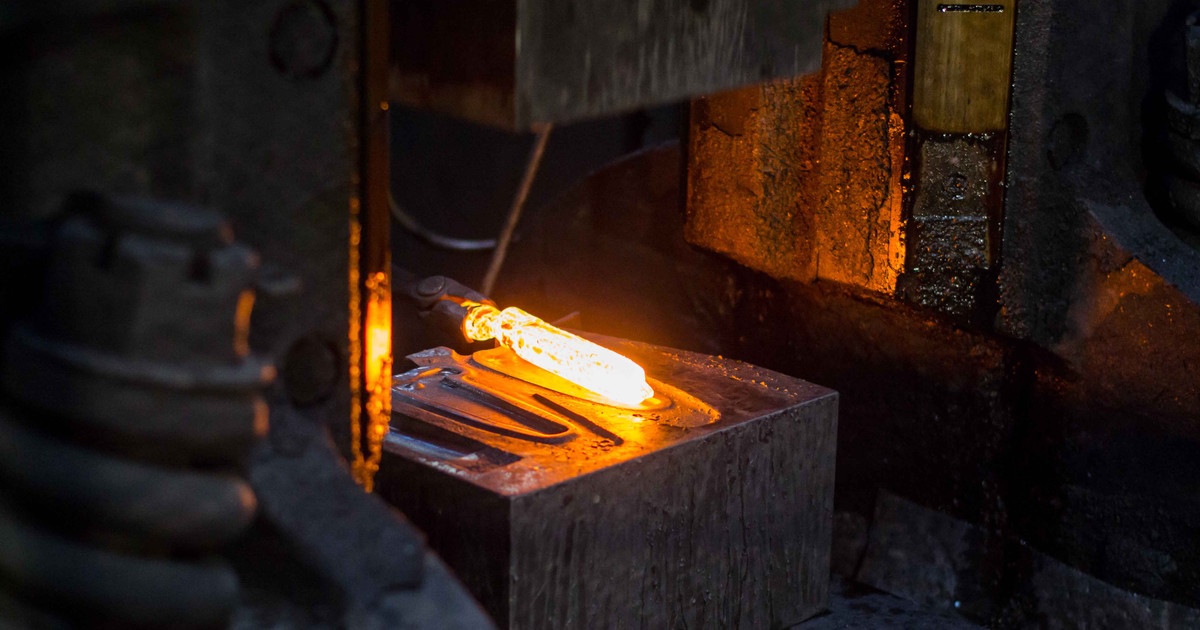
Hot forging is the plastic deformation of metal at a temperature and strain rate such that recrystallization occurs simultaneously with deformation, thus avoiding strain hardening. For this to occur, high workpiece temperature (matching the metal’s recrystallization temperature) must be attained throughout the forging process.
Hot forging offers many benefits, including:
- Malleability: Metals become highly malleable during the hot forging process, allowing complex shapes to be formed with relatively low force.
- Ductility: Strain hardening is eliminated by working above the recrystallization temperature, which helps improve ductility and toughness.
- Strength: Hot forging refines grain structure, resulting in stronger and more durable components.
Explore two specific types of hot forging, isothermal forging and aluminum hot forging, in more detail below.
Isothermal Forging
One form of hot forging is isothermal forging, where materials and dies are heated to the same temperature. In nearly all cases, isothermal forging is conducted on superalloys in a vacuum or highly controlled atmosphere to prevent oxidation.
Aluminum Hot Forging
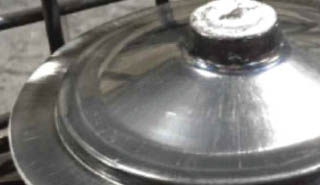
Aluminum hot forging is a unique and propriety process developed by Queen City Forging. In this process, rapid Infrared heating is used to enhance physical properties for aluminum forging.
Summary
To recap, cold, warm, and hot forging are distinguished mainly by the temperature at which the metal is deformed. Cold forging takes place at or near room temperature, which saves energy but is limited to simpler shapes.
Warm forging occurs at intermediate temperatures, typically below the metal’s recrystallization point. This process offers many benefits including reduced tooling loads and increased ductility.
Hot forging, on the other hand, is carried out above the recrystallization temperature. This makes the material more malleable and allows the production of complex shapes with lower force.
Which Type of Forging is Right For You?
Not sure if cold, warm or hot forging is right for your project? As a leading forging company in the United States, Queen City Forging can help you determine the best forging process for your needs. Our expertise provides innovative, cost-competitive solutions that produce a quality forge for OEMs, every time. Contact us or request a quote today.