

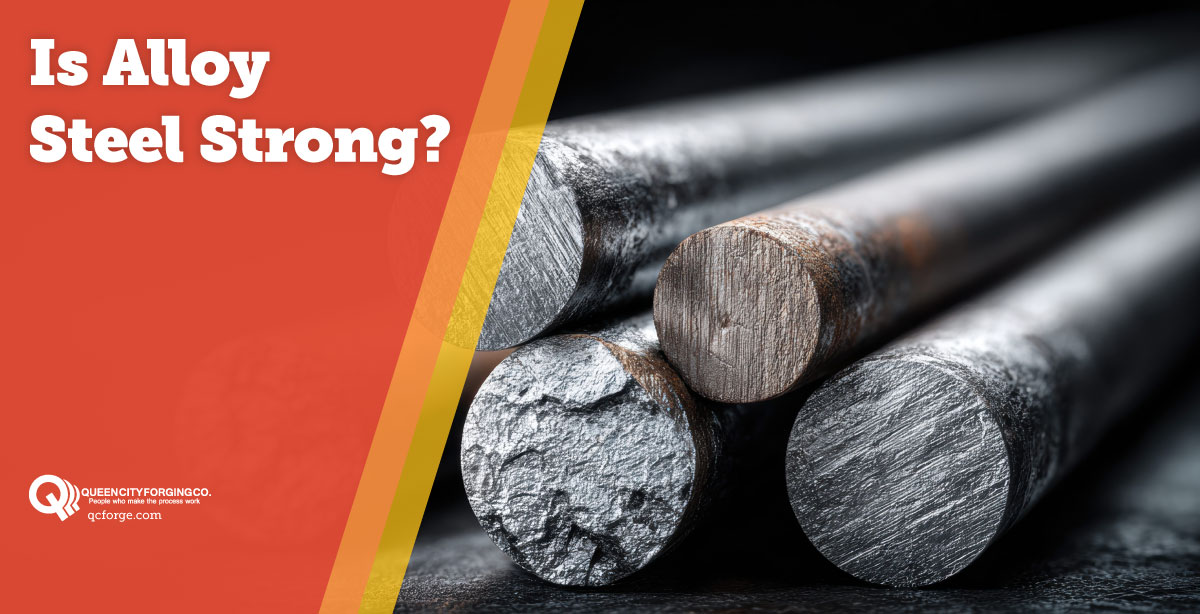
Alloy steel is known for its strength– along with other qualities like toughness and wear resistance. Its superior strength makes alloy steel ideal for high-stress applications in the automotive, aerospace, and construction industries.
Learn more about the strength, enhanced properties, and applications of alloy steel below.
The Strength of Alloy Steel
Alloy steel is renowned for its impressive strength, which is achieved through the addition of various alloying elements. These elements, such as chromium, nickel, manganese, and vanadium, contribute to the steel’s overall mechanical properties, making it stronger and more durable than traditional carbon steel.

How Alloying Elements Enhance Strength
Each alloying element plays a specific role in enhancing the strength of alloy steel. These elements include:
- Chromium: Increases hardness and tensile strength, making the steel more resistant to wear and tear.
- Nickel: Adds toughness and strength, allowing the steel to withstand high stress and impact.
- Manganese: Improves hardenability and wear resistance, essential for heavy-duty applications.
- Vanadium: Enhances strength and toughness, making the steel suitable for high-stress environments.
Comparing Alloy Steel to Other Steels
When compared to other types of steel, alloy steel stands out for its superior strength. See how the strength of alloy steel compares to carbon steel and stainless steel.
Alloy Steel vs. Carbon Steel Strength
✔Winner: Alloy steel. While carbon steel is strong, it lacks the additional properties provided by alloying elements. Alloy steel, with its enhanced strength, is often preferred for applications requiring higher performance.
Alloy Steel vs. Stainless Steel Strength
✔Winner: Alloy steel. Stainless steel is technically a type of alloy steel, but it’s known more for its corrosion resistance than strength. This makes it ideal for environments exposed to moisture and chemicals. Alloy steel, on the other hand, typically offers greater overall strength and hardness, making it ideal for heavy-duty applications like construction equipment and automotive parts.
Applications Requiring Strong Alloy Steel
The strength of alloy steel makes it indispensable in various high-stress applications, including:
- Automotive Industry: Used in the manufacturing of parts that require high strength and durability, such as:
- Engine components
- Drive shafts
- Suspension systems
- Construction: Essential for building structures and equipment that need to withstand significant loads and stress, like:
- Bridges
- Skyscrapers
- Heavy machinery
- Aerospace: Critical for applications where strength and reliability are paramount, such as:
- Aircraft parts
- Landing gear
- Turbine blades
- Tooling: Ideal for making tools that must endure high pressure and wear, including:
- Dies
- Molds
- Cutting tools

Fun Fact: The Role of Heat Treatment
Did you know that the strength of alloy steel can be further enhanced through heat treatment processes? Techniques like quenching and tempering can significantly increase the hardness and strength of alloy steel, making it even more suitable for demanding applications.

Yes, Alloy Steel is Strong!
In conclusion, alloy steel is indeed strong, thanks to the addition of various alloying elements that enhance its mechanical properties. Its superior strength, combined with other beneficial characteristics like toughness and wear resistance, makes it a preferred material in numerous high-stress applications. Whether it’s in the automotive, construction, aerospace, or tooling industry, alloy steel’s strength ensures reliability and performance.
So, the next time you encounter a product made from alloy steel, you can be confident in its strength and durability. It’s a testament to the advanced engineering and materials science that goes into creating this remarkable material.
For more insights into the properties and applications of alloy steel, feel free to reach out to us at Queen City Forging. We’re here to help you understand the incredible world of alloy steel and its many benefits!
Filed under: Forging Materials, Top Forging Questions