

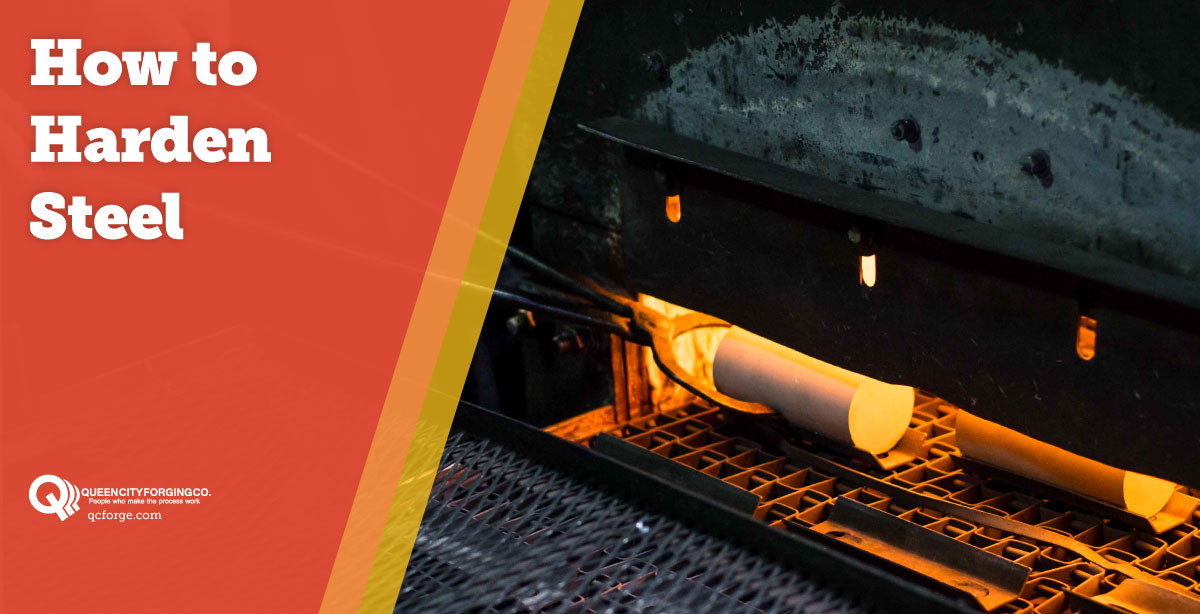
Hardening steel is a heat treatment process that increases the material’s hardness and strength. The process typically involves:
- Selecting the appropriate steel
- Heating the steel to a high temperature
- Rapidly cooling (quenching) the steel to achieve the desired hardness
Additional steps involve tempering and inspecting the product for defects. Below, find a detailed step-by-step guide on how to harden steel.
1. Select the Appropriate Steel
Carbon Content
Not all steel can be hardened. High-carbon steels (e.g., 0.6% to 1.0% carbon) and some alloy steels are typically used for hardening. Conversely, low-carbon steels (e.g., below 0.3% carbon) do not respond well to hardening.
Alloying Elements
Steels with elements like chromium, molybdenum, or vanadium can also be hardened and often exhibit improved hardenability.
2. Heat the Steel (Austenitizing)
Temperature
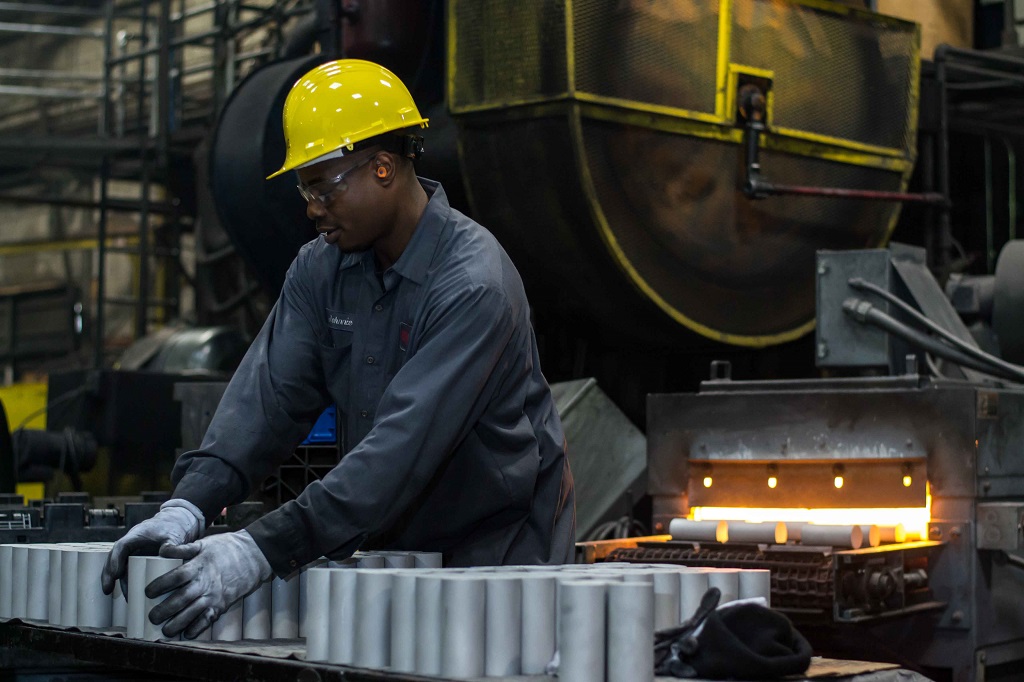
Heat the steel to its austenitizing temperature, usually between 750°C and 900°C (1382°F to 1652°F), depending on the type of steel. The goal is to form austenite, a face-centered cubic structure that is a precursor to martensite.
- Carbon Steel: Typically heated to 800°C to 850°C (1472°F to 1562°F).
- Alloy Steel: The temperature may vary, often between 800°C to 900°C (1472°F to 1652°F).
Soaking Time
Hold the steel at the austenitizing temperature to ensure uniform heating and transformation. The soaking time depends on the steel’s size and thickness but is usually 30 minutes to 1 hour.
3. Quenching (Rapid Cooling)
Quenching Medium
The steel is rapidly cooled in a quenching medium to lock in the hard martensitic structure. Quenching mediums include:
- Water: Provides the fastest cooling but can lead to cracking in higher-carbon steels.
- Oil: Slower cooling than water, reduces the risk of cracking, commonly used for medium- to high-carbon steels.
- Air or Gas: Used for some alloy steels with lower hardenability to avoid thermal shock.
Quenching Process
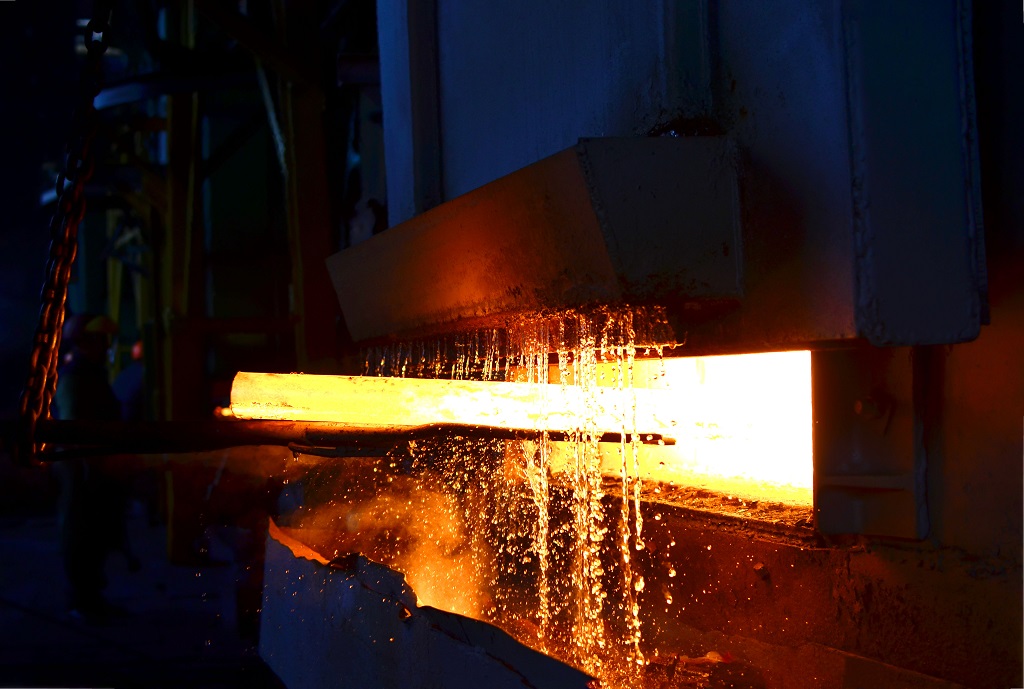
- Immerse the heated steel immediately in the quenching medium.
- Agitate the steel in the quenching medium to ensure even cooling and prevent the formation of vapor pockets that could lead to soft spots.
Consideration
Rapid cooling causes the steel to transform from austenite to martensite, a very hard and brittle structure.
4. Tempering (Optional but Recommended)
Purpose
After quenching, the steel is often too brittle for practical use. Tempering reduces brittleness while retaining much of the hardness.
Tempering Temperature
Heat the quenched steel to a lower temperature, typically between 150°C and 650°C (302°F to 1202°F), depending on the desired balance of hardness and toughness.
- Low Temperatures (150°C to 250°C / 302°F to 482°F): Retain more hardness but provide less toughness.
- Higher Temperatures (400°C to 650°C / 752°F to 1202°F): Increase toughness at the cost of some hardness.
Tempering Time
Hold the steel at the tempering temperature for 1 to 2 hours, then allow it to cool slowly.
5. Inspection and Finishing
Inspect for Cracks or Warping
After hardening and tempering, inspect the steel for any defects such as cracks or warping that may have occurred during the process.
Surface Finishing
Depending on the application, the steel may need further surface treatment such as grinding, polishing, or coating.
Hardening Steel
In summary, hardening steel involves heating it to a high temperature to transform its structure to austenite, followed by rapid cooling (quenching) to form hard martensite. Tempering is usually performed afterward to reduce brittleness while maintaining the desired level of hardness. The choice of steel, quenching medium, and tempering temperature all play crucial roles in the final properties of hardened steel.
Filed under: Forging Process, Forging Materials, Extend Life of Parts