

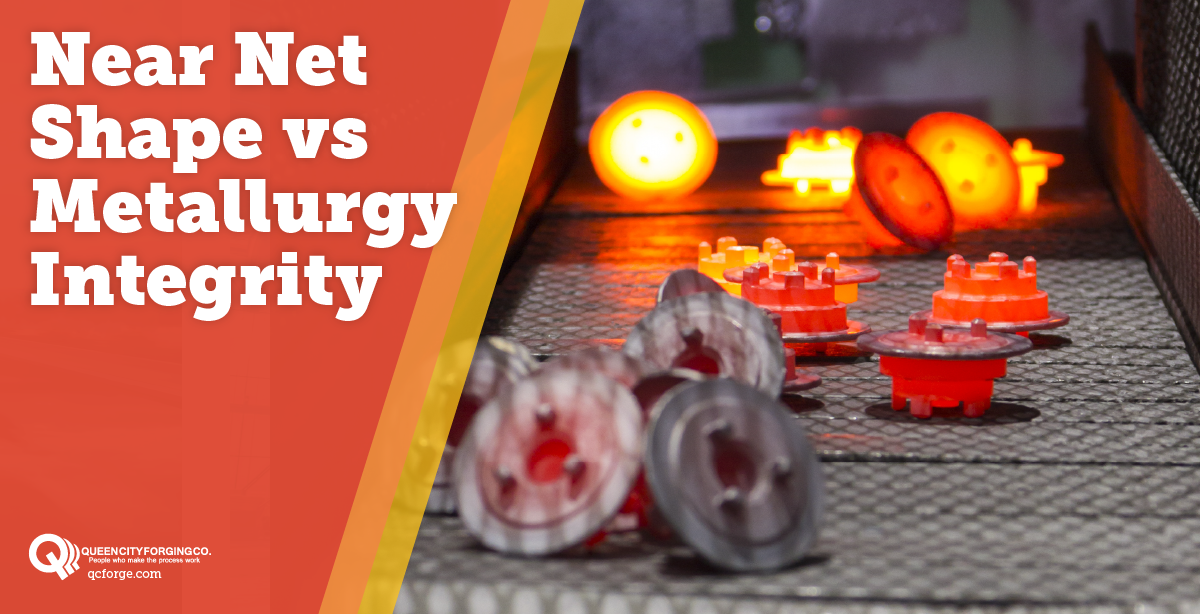
Casting and forging processes produce different degrees of net or near net shapes. The metallurgical qualities of each process must be understood to allow design of a component best able to provide satisfactory service for the intended use.
For example, new alloys developed for the aerospace industry promise to be more efficient. They need to be lightweight, handle faster speeds, and higher surface temperatures. Understanding the properties and degree of near net shape produced by casting and forging can help metalworkers select the process best suited for their component.
Casting
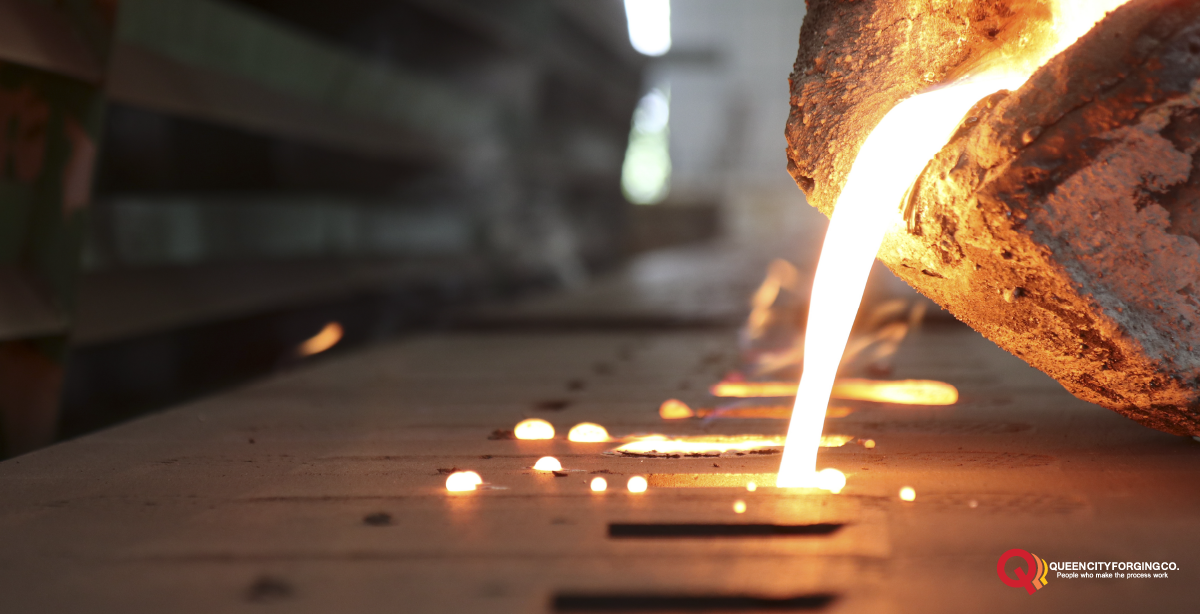
With casting, molten metal at liquid temperature is poured or injected in a mold or die. The casting is cooled and broken from the mold or ejected from the die. The shape and dimensionality conform to the mold or die. Dimensional shrinkage, which occurs as the casting cools, must be accommodated in the design of the mold or die. Casting can produce near net shape parts with a high degree of precision.
Powder metallurgy
With powder metallurgy, premixed metal powder and binding agents are compressed in a mold, creating shape and density. This initial condition is termed “the green state.” The initial product from the mold is called a “compact,” which is shaped but technically not solid.
Next, the compacts are heated in a “sintering oven,” exposing them to temperatures just below the melting point of the metal. Binding materials are burned off and the metal particles fuse together without becoming fully liquid, so as to maintain shape. Release of binders and elimination of voids cause some dimensional shrinkage. Like casting, powder metallurgy can produce near net shape parts with a high degree of precision.

Casting and Powder Metallurgy Commonalities:
With these different processes, there are similarities.
- Accommodate the blending of material – either as powder or liquid
- Can be suited for high volume product runs
- Production parts with varying complexities
- Production of near net shape parts with a high degree of precision
Casting and Powder Metal Differences:
- Powders will have additional binder materials in the mix
- Casting shrinkage can lead to voids not typical in powder metallurgy
- Casting may entrain impurities from the melt, mold or during the pour
- Powder metal may be deliberately compacted to lower densities per end use
Forging
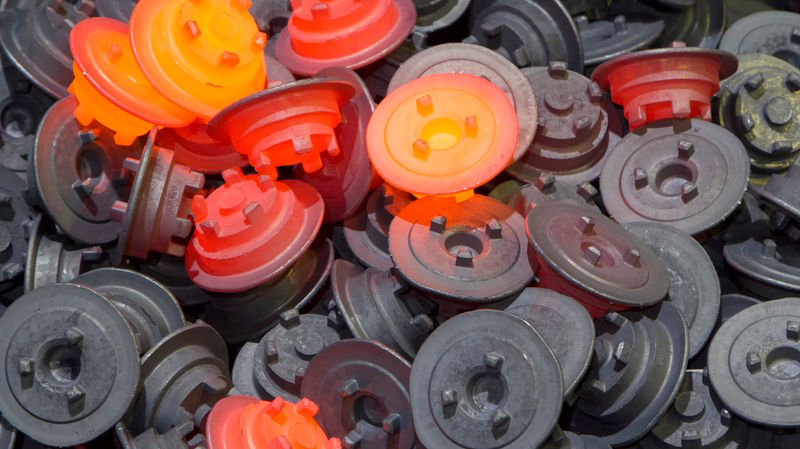
Forging involves metals and forgeable materials being hammered or pressed at a variety of temperatures while in a solid state. Deformation is designed to both create a bulk shape conforming to the shape of the end product and assure metallurgical integrity. The process creates a targeted microstructure to produce the ultimate physical properties of a given material.
Forging Commonalities to Casting and Powder Metal:
- A wide variety of alloys can be used to create desired products
- Each process creates a shape more nearly that of the intended end use product
- Resulting metal parts are typically more durable than other materials
- Subsequent machining of fine details and high surface finish is required
Forging Differences to Casting or Powder Metal:
- Forging assures optimum strength at critical stress points with minimum material
- Forged parts are fully dense with no voids that can initiate component failure
- Deformation disperses any impurities remaining from original raw material
- Forgings have unmatched impact toughness and fatigue strength
- Forgings machine to blemish free surfaces, ready for subsequent plating
Visit our Forging Knowledge section to learn more about casting, forging, and other metalworking topics.
Filed under: Forged vs Cast, Forging Process, Top Forging Questions, Types of Forging