


Is Copper Antimicrobial?
Copper and its alloys have natural antimicrobial properties, a fact known since ancient times. The antimicrobial properties of copper make it ideal for the healthcare industry, with uses ranging from surgical equipment to sink fixtures.
Copper in the Healthcare Industry
Copper has increasing application in the healthcare industry. The metal makes hospital environments more hygienic by killing bacteria on frequently touched surfaces.
Copper has various uses in healthcare settings, including:
- Medical instruments
- Furnishings
- Fixtures
- Carts
- Surgical equipment
- Diagnostic equipment
Group 1 alloys containing 96.2% copper are the only solid metal touch surface materials registered with the U.S. EPA as antimicrobial agents. They can kill up to 99.9% harmful bacteria within two hours of contact. Furthermore, studies confirm they kill the coronavirus within four hours of contact.

Copper in Other Industries
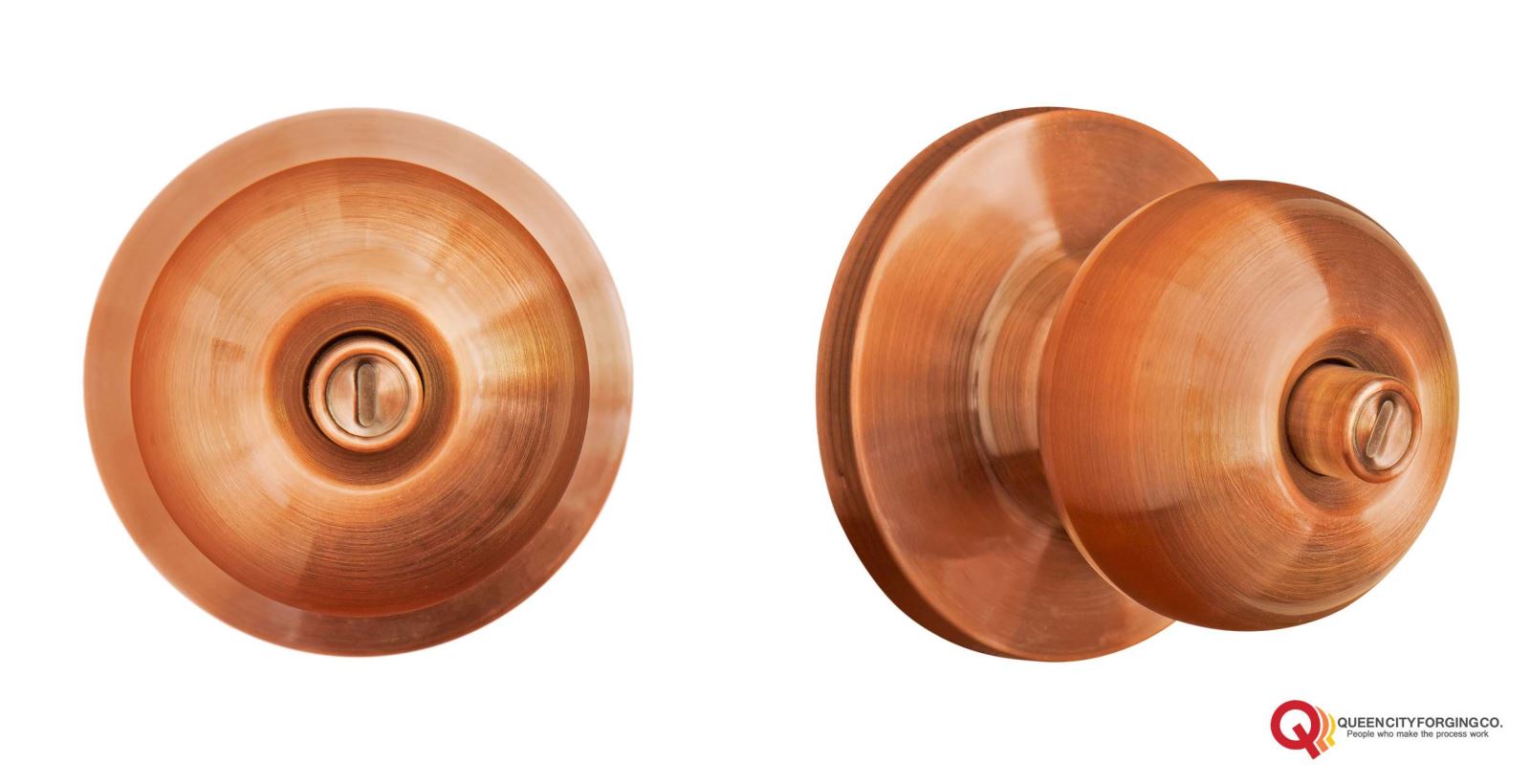
The antimicrobial features of copper and its alloys also lead to applications in schools, government buildings, and any public gathering venue with large numbers of people. Uses include hardware such as door handles and door push plates.
Since copper can prevent the spread of disease by eliminating the pathogens that cause illness, these fixtures are ideal for anywhere people repeatedly touch surfaces as they move through a public environment.
Plus, not only do copper and copper alloys continuously kill bacteria– components made from these materials can be expected to survive decades of constant use, remaining safe to use and touch.
Forging Antimicrobial Copper
Queen City Forging has forged thousands of components from pure copper OFC 110 (C11000) and other high percentage alloys, such as copper-nickel alloys, that meet the standards required to be considered antimicrobial.
Structural components that require such attributes, subject to exposure to pathogens and difficult to clean or sterilize, may be candidates for forgings made from pure copper or very high copper alloys. Commonly forged alloys include 377 (C37700), often called “forging brass” and alloy 360 (C36000), a “free machining alloy.” While neither contain sufficient copper in the alloy to be in the highest class of “antimicrobial copper alloys,” there may be evidence of pathogen inhibition.
Engineers must understand both the mechanical and antimicrobial properties of copper materials to ensure design selection meets both structural and biological requirements. Design and validation with proper materials may reduce or eliminate costly, time-consuming cycles of disassembly and harsh cleaning required for materials that have no inherent capability to eliminate pathogens.
Benefits of Forging Copper
Advantages of closed die forging of copper and brass components include:
- Superior strength
- Close, repeatable tolerances
- Lower overall production costs than machining from solid bar or plate
- Attractive surface finishes
Copper and copper alloys typically have excellent formability allowing near to net shapes to be produced rapidly and efficiently.
Queen City Forging has wide experience in forging copper and copper alloys for applications in healthcare, along with other areas such as EV transportation, fluid handling, and hazardous environments. We can suggest which alloys to investigate as appropriate for your manufacturing and service requirements.
Given our experience, Queen City Forging provides a unique understanding of copper metallurgy that has led to process innovations for forging high-density and high-strength copper components. Learn more about our copper forging capabilities or contact us today.
Filed under: Components, Forging Materials