

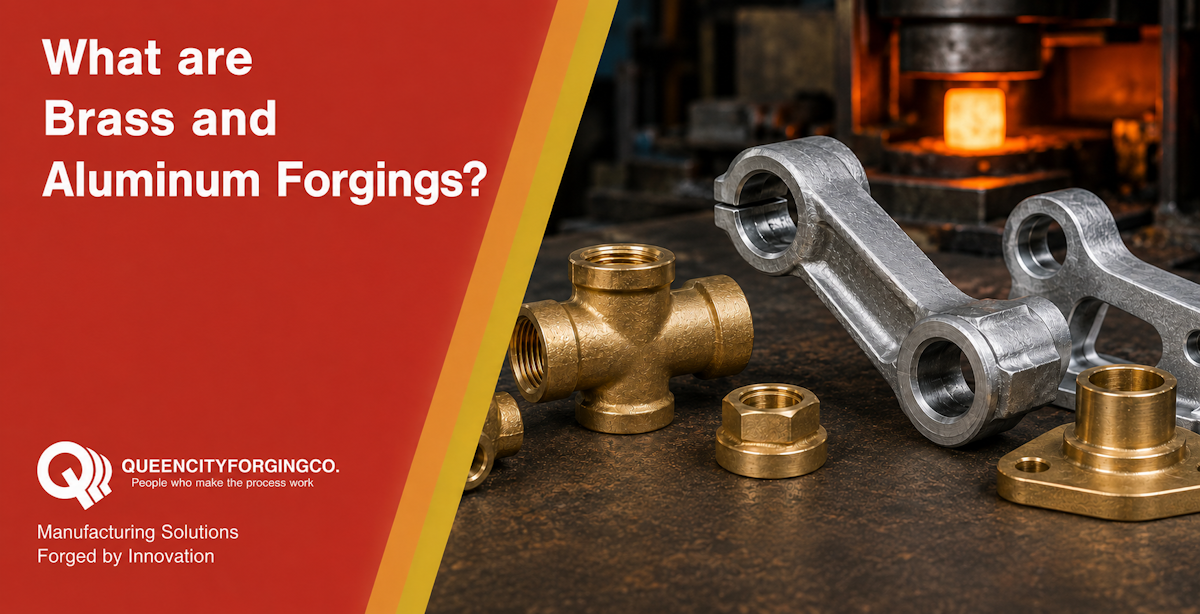
What are Brass and Aluminum Forgings?
Brass and aluminum forging refers to the process of shaping brass (a copper-zinc alloy) or aluminum (a lightweight, corrosion-resistant metal) through forging, a manufacturing method that uses heat and pressure to form precise, durable components. While brass and aluminum are distinct materials with unique properties, they are often forged using similar techniques, and in some cases, they’re combined in hybrid applications or sequential processes to leverage their complementary strengths.
- Brass: An alloy of copper and zinc, brass is known for its corrosion resistance, machinability, and attractive golden appearance. It’s strong yet malleable, making it ideal for intricate components.
- Aluminum: A lightweight, durable metal with excellent corrosion resistance and thermal conductivity, aluminum is prized for applications where weight reduction is critical.
Forging these materials involves heating them to a pliable state and shaping them using dies under high pressure, resulting in parts with superior strength, precision, and durability compared to casting or machining.
Below, we’ll dive into the process, properties, applications, and advantages of forging nonferrous alloys of brass and aluminum. Whether you’re an engineer, business owner, or simply curious, this guide will shed light on this versatile forging technique.
The Brass Aluminum Forging Process
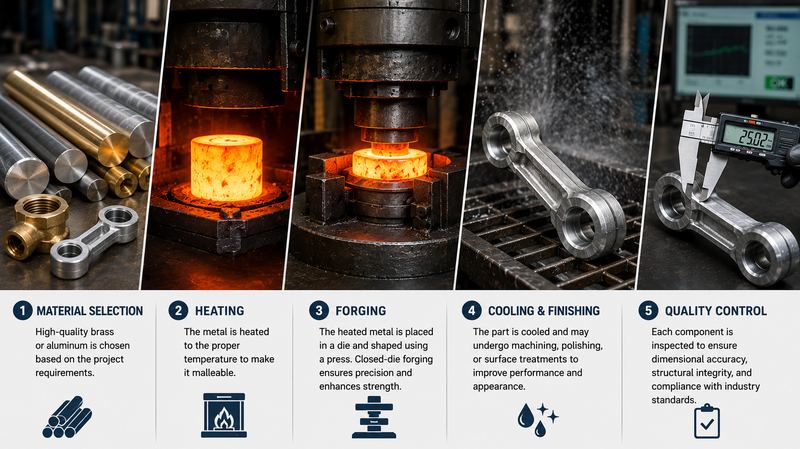
Forging brass and aluminum requires precision and expertise to maximize their properties. Here’s how the process works at Queen City Forging:
- Material Selection: High-quality brass (e.g., C36000 for machinability or C46400 for naval applications) or aluminum (e.g., 6061 or 7075 for strength) is chosen based on the project’s requirements.
- Heating: The metal is heated to a specific temperature—typically 1,200–1,500°F (650–815°C) for brass and 700–900°F (370–480°C) for aluminum—to make it malleable without compromising its structure.
- Forging: The heated metal is placed in a die and shaped using a press or hammer. Techniques like closed-die forging ensure precision and enhance the material’s grain structure for added strength.
- Cooling and Finishing: The forged part is cooled and may undergo machining, polishing, or surface treatments like anodizing (for aluminum) or plating (for brass) to enhance performance or aesthetics.
- Quality Control: Each component is inspected for dimensional accuracy, structural integrity, and compliance with industry standards.
Our forging process at Queen City Forging optimizes the grain flow of brass and aluminum, resulting in parts that are stronger and more resistant to fatigue than those produced by other methods.
Why Choose Brass Aluminum Forging?
Brass and aluminum forging offers distinct advantages, making it a preferred choice for many applications. Here are the key benefits, drawn from our work at Queen City Forging:
- Strength and Durability: Forging aligns the grain structure of brass and aluminum, creating components that withstand high stress and wear.
- Lightweight (Aluminum): Aluminum forgings are ideal for industries like aerospace, where weight reduction is critical without sacrificing strength.
- Corrosion Resistance: Both materials resist corrosion—brass in marine environments and aluminum in outdoor or chemical settings.
- Aesthetic Appeal (Brass): Brass’s golden hue makes it a favorite for decorative and functional components, such as fittings and hardware.
- Precision: Forging allows for intricate shapes and tight tolerances, essential for complex parts in machinery or electronics.
- Cost-Effectiveness: Both materials are relatively affordable, and forging minimizes waste, reducing overall production costs.
We’ve seen brass and aluminum forgings excel in applications like marine hardware, where their combination of strength, corrosion resistance, and machinability delivers unmatched performance.
Common Applications of Brass Aluminum Forging
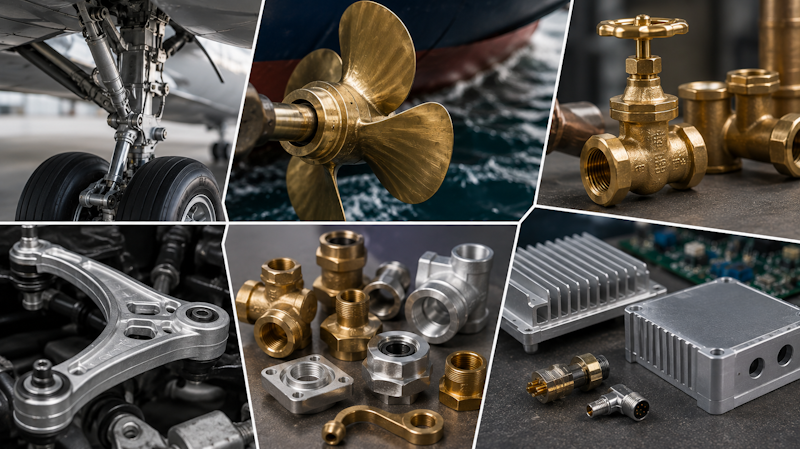
Brass and aluminum forgings are used across diverse industries due to their unique properties. Here are some real-world examples:
- Aerospace: Aluminum forgings form lightweight, high-strength components like landing gear parts and structural brackets. Brass or bronze are used in some bearing applications
- Marine: Brass forgings, such as propeller shafts and valves, resist saltwater corrosion, while aluminum is used in hull fittings and masts.
- Automotive: Aluminum forgings create suspension components and engine parts, reducing vehicle weight. Brass is used in decorative trim and fuel system fittings.
- Plumbing and Hardware: Brass forgings are common in valves, faucets, and pipe fittings due to their machinability and corrosion resistance.
- Electronics: Aluminum forgings serve as heat sinks and enclosures, leveraging their thermal conductivity, while brass is used in connectors and terminals.
When specifying brass or aluminum forgings, consider the alloy grade. For example, aluminum 7075 offers superior strength, while brass C26000 is ideal for decorative applications.
Brass Aluminum Forging vs. Other Methods
How does forging brass and aluminum compare to other manufacturing methods like casting or machining?
- Forging vs. Casting: Forged parts are stronger and denser due to refined grain structure, while cast parts may have porosity or defects. Forging is preferred for critical applications.
- Forging vs. Machining: Forging produces stronger parts with less material waste, though machining is better for ultra-precise finishing.
- Brass vs. Aluminum Forgings: Brass is denser and more machinable, ideal for intricate fittings. Aluminum is lighter and better for weight-sensitive applications.
At Queen City Forging, we often recommend forging over casting for brass and aluminum components in high-stress environments, as our clients have seen firsthand.
Challenges of Brass Aluminum Forging
While brass and aluminum forging offers many benefits, there are challenges to consider:
- Temperature Control: Both materials require precise heating to avoid cracking or weakening during forging. Typically, aluminum alloys should be forged below 900F (480C) while copper based alloys such as brass and bronze will be forged in excess of 1200F (650C)
- Tool Wear: While these nonferrous alloys tend to provide superior die wear characteristics compared to ferrous and high alloy forgings, proper die temperature control and die lubricants as well as high-quality tooling materials are necessary to ensure extended die life.
- Cost of Alloys: Certain high-performance alloys, like aluminum 7075 or naval brass, can be more expensive than standard grades. At Queen City Forging, we mitigate these challenges with advanced equipment, rigorous quality control, and deep metallurgical knowledge, ensuring flawless components for our clients.
Tips for Working with Brass Aluminum Forging
If you’re considering brass or aluminum forgings for your project, here are some best practices:
- Choose the Right Alloy: Match the alloy to your application—aluminum 6061 for general use, brass C46400 for marine environments.
- Specify Tolerances: Forging offers tight tolerances, but communicate your needs clearly to avoid over-machining.
- Consider Surface Treatments: Anodizing aluminum or plating brass can enhance durability and aesthetics.
- Partner with Experts: Work with trusted forging experts like Queen City Forging to ensure quality and compliance with industry standards.
Ready to Explore Brass or Aluminum Forging for Your Project?
Brass and aluminum forging offers a powerful combination of strength, corrosion resistance, and precision, making it ideal for applications from aerospace to marine. Whether you need lightweight aluminum brackets or durable brass fittings, Queen City Forging can help.
We’ve honed the craft of metal forging for over 140 years, working with a range of materials to meet the needs of industries like automotive, rail, and manufacturing. Our specialties include high-performance brass and aluminum forgings.
Contact us today to discuss your project or learn more about our custom forging solutions. Let’s create components that stand the test of time.
Filed under: Forging Materials, Types of Forging